If you’ve been scrolling through social media or texting with friends, you’ve probably come across the abbreviation “WTW.”
It’s short, casual, and pops up in conversations across Snapchat, Instagram, WhatsApp, and everyday chats. Because internet slang evolves fast, many people search for “WTW meaning in text” to avoid misunderstanding a message or replying the wrong way.
This guide breaks down everything you need to know about WTW its meaning, how to use it, where it came from, and how people respond to it.
Whether you’re a frequent texter, a parent trying to keep up with slang, or someone exploring modern internet language, this easy-to-read article covers it all.
What Does WTW Mean in Text & Chat?
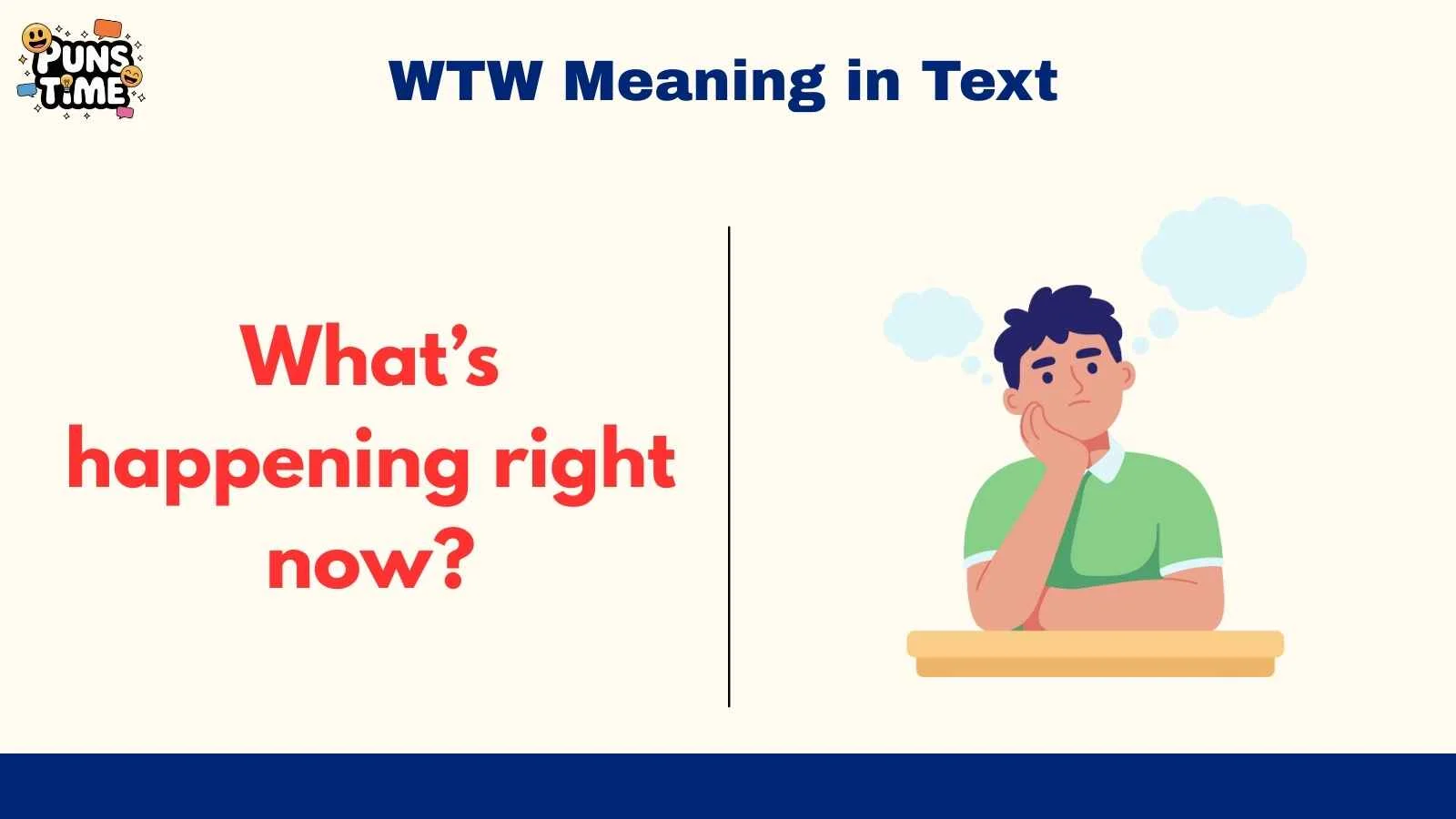
WTW is an abbreviation that stands for “What’s the word?” In texting, this phrase is another way of asking:
- What’s going on?
- What are you doing?
- Any plans?
- What’s happening right now?
It’s a casual check-in that often signals someone wants to talk, hang out, or get an update. Much like “wyd” or “sup,” WTW keeps conversations light and simple.
Here’s how it typically functions:
- Starting a conversation: Someone might send “WTW” to open a chat when they don’t have a specific question.
- Checking on someone’s plans: It can hint at wanting to meet up.
- Just being friendly: Some people use it as a quick “hello” to stay connected.
Because it’s brief and easy to type, WTW fits perfectly into the fast pace of texting culture. The meaning rarely changes based on tone, but context matters—especially if someone writes it out of the blue. In most cases, they’re asking what you’re up to or if you’re free for something.
Full Form, Stands For & Short Meaning of WTW
The full form of WTW is:
- W = What’s
- T = The
- W = Word
The short meaning is simply: “What’s up?” or “What’s happening?”
Like many modern abbreviations, WTW is part of the broader trend of shortening common phrases to make texting faster. Teens, young adults, and social media users especially prefer quick shortcuts to communicate without typing full sentences.
Here are some variations people occasionally use:
- “What’s the word tonight?” (asking about plans)
- “Word?” (meaning: okay / got it)
- “What’s the move?” (similar meaning)
Even though the full form sounds slightly formal, the slang version is extremely casual. You wouldn’t normally use WTW in professional emails or academic writing. It’s best for messaging apps, online comments, and informal chats with friends.
Origin, History & First Known Use of WTW
The phrase “What’s the word?” has roots in African American Vernacular English (AAVE) and was commonly used in the 1980s and 1990s as a friendly greeting. It was a way to ask if anything new or interesting was going on.
As texting grew in popularity during the early 2000s, many spoken expressions—especially short greetings—transformed into abbreviations. WTW likely gained traction in the early smartphone era, around the same time acronyms like WYD, BRB, and TTYL became widespread.
Social media apps accelerated its usage. Because platforms like Snapchat and Instagram emphasize brief, fast communication, WTW emerged as a convenient shorthand for kicking off conversations.
Unlike newer slang terms that appear suddenly on TikTok, WTW evolved naturally over decades. It’s a blend of old-school street slang and modern digital culture, which is why it feels both familiar and trendy at the same time.
How People Use WTW in Daily Conversations
People use WTW in everyday conversations to express curiosity or to start a chat. It’s versatile and can fit in many contexts:
1. Checking in
“WTW” works great when you just want to know what someone is doing:
- “Hey, wtw rn?”
- “WTW today?”
2. Starting a hangout
It hints that you might want to meet up:
- “WTW later? Let’s get food.”
3. Breaking the silence
If you haven’t talked to someone in a while, it’s a neutral opener:
- “Long time no talk. WTW?”
4. Showing interest
It can subtly signal interest in someone’s plans or life:
- “WTW this weekend? 👀”
5. Inviting conversation
Sometimes people use it to keep texts moving:
- “Bored. WTW?”
In all cases, WTW is casual, warm, and friendly. It feels less formal than “What are you doing?” and more polite than “wyd,” which can sometimes come off as blunt.
WTW Meaning Across WhatsApp, Instagram, TikTok & Snapchat
The meaning of WTW stays mostly the same on all platforms, but the tone can shift slightly.
Used mainly among friends to check in or plan something:
- “WTW this afternoon? Want to study together?”
Often appears in DMs after someone posts a story or photo:
- “Saw your story. WTW tonight?”
TikTok
In comments or captions, WTW can be playful or used as a reaction:
- “This outfit tho… wtw 👀🔥”
Snapchat
Most common platform for WTW because of its quick messaging culture:
- “Streaks? WTW rn?”
- “WTW later? Let’s link.”
In every case, it’s shorthand for asking about someone’s current mood, activities, or plans.
Different Meanings of WTW in Other Fields
Although WTW usually means “What’s the word?”, it can have alternate meanings based on context:
1. Business / Corporate World
- WTW = Willis Towers Watson, a major global advisory company.
2. Fitness / Health Content
- Sometimes used as “Walk the Walk” (motivational slang).
3. Finance
- WTW = World Trade Week (rare, event-specific).
4. Entertainment / Music
- Artists sometimes use “What’s the word?” in lyrics to mean: “What’s happening?”
Always consider the environment—if someone is discussing business or insurance, they probably don’t mean “What’s the word?” at all.
Common Confusions, Mistakes & Wrong Interpretations
Because WTW looks similar to other abbreviations, people can misunderstand it. Common mistakes include:
Thinking it means “What the what?”
Some confuse it with expressions like WTH or WTF, but WTW is not an angry or shocked abbreviation.
Assuming it’s rude
It’s actually very friendly—less blunt than “wyd.”
Misreading it as a company name
In corporate contexts, WTW may refer to Willis Towers Watson, which confuses people outside that field.
Interpreting it as romantic interest
Someone texting “WTW?” isn’t necessarily flirting—they could simply be checking in.
Using it in formal communication
It’s not appropriate for emails, job applications, or professional messages.
Understanding tone and context helps you avoid awkward moments.
Similar Terms, Alternatives & Related Slang
If you want to mix up your texting slang, here are related expressions that serve the same purpose as WTW:
- WYD – What are you doing?
- SUP – What’s up?
- WSP – What’s poppin’?
- WYM – What do you mean? (not the same, but often confused)
- WYA – Where you at?
- HBU – How about you?
- W/T Move? – What’s the move? (asking about plans)
These alternatives can make casual chats feel fresh and natural.
Examples of WTW in Real Chat Situations
Here are natural sample messages showing how people use WTW:
- “Hey, wtw rn? 😊”
- “WTW tonight? Thinking about going out.”
- “Saw your post—wtw today?”
- “Bored lol. WTW?”
- “WTW this weekend? Want to grab coffee?”
- “Yo, wtw? Haven’t heard from you in a minute.”
And here are some short conversation samples:
Friend 1: WTW rn?
Friend 2: Not much, just chilling. U?
Crush: WTW later? 👀
You: Probably free after 7. What’s up?
Sibling: WTW?
You: Homework… unfortunately 😩
How to Reply When Someone Says WTW
Your response should match the tone and purpose of the conversation. Here are natural ways to reply:
If you’re available
- “Not much, you?”
- “Just chilling. What’s the move?”
If you’re busy
- “Can’t chat right now, but hit me up later.”
- “At work atm. WBU?”
If you want to hang out
- “Nothing yet. You trying to link?”
- “WTW tonight? I’m down for something.”
If you want to keep it friendly
- “Just relaxing. How’s your day going?”
If you want to flirt (lightly)
- “Nothing… what you got planned? 😉”
Replies should feel natural, short, and genuine.
Is WTW Still Popular? Trends & Online Usage
Yes—WTW remains widely used and shows steady popularity, especially on platforms with younger users. Its appeal comes from:
- simplicity
- quick typing
- friendly tone
- versatility across social media
TikTok and Snapchat keep the abbreviation alive since both encourage fast, conversational messaging. While some slang terms fade after a few months, WTW has been around for years and continues to feel relevant.
It may not be as universal as LOL or OMG, but its steady usage suggests it won’t disappear anytime soon.
FAQs:
1. What does WTW mean in text?
It means “What’s the word?” or simply “What’s going on?”
2. Is WTW slang or formal?
It’s informal slang used in casual conversations.
3. Does WTW mean someone wants to hang out?
Not always, but it can be a hint depending on context.
4. Is WTW the same as WYD?
Similar, but WYD is more direct. WTW is friendlier.
5. What does WTW mean on Snapchat?
It means “What’s going on?” or “What are you up to right now?”
Internal Linking Suggestions
(You can link to pages about related slang terms.)
- WYD meaning
- WYA meaning
- SUP meaning
- WSP meaning
- WYM meaning
Conclusion:
The abbreviation WTW is simple, friendly, and widely used across texting and social media. It’s a quick way to ask what someone is doing, start a conversation, or check if someone is free to make plans.
Whether you see it in a DM, a story reply, or a casual message from a friend, its meaning stays consistent: What’s the word? What’s going on?
Understanding slang like WTW helps you keep up with modern digital communication and interact naturally online.
As long as you use it in informal settings and pay attention to context, it’s an easy abbreviation to incorporate into everyday chats. And with its continued popularity, WTW is likely to remain part of texting culture for years to come.