If you’ve ever received a short reply like “TY!” in a message and wondered what it meant, you’re not alone. The TY meaning in text is one of the most searched slang terms today, especially among people navigating chats, social media comments, and quick replies.
As online communication gets faster, abbreviations like TY help people express emotions without typing full sentences. But while it looks simple, its tone and usage can change depending on context. Some people use it warmly, others casually, and sometimes it can even feel a little cold.
In this guide, we’ll break down exactly what TY means, where it came from, how people use it across platforms like WhatsApp and Instagram, and how you should reply when someone sends it to you.
What Does TY Mean in Text & Chat?
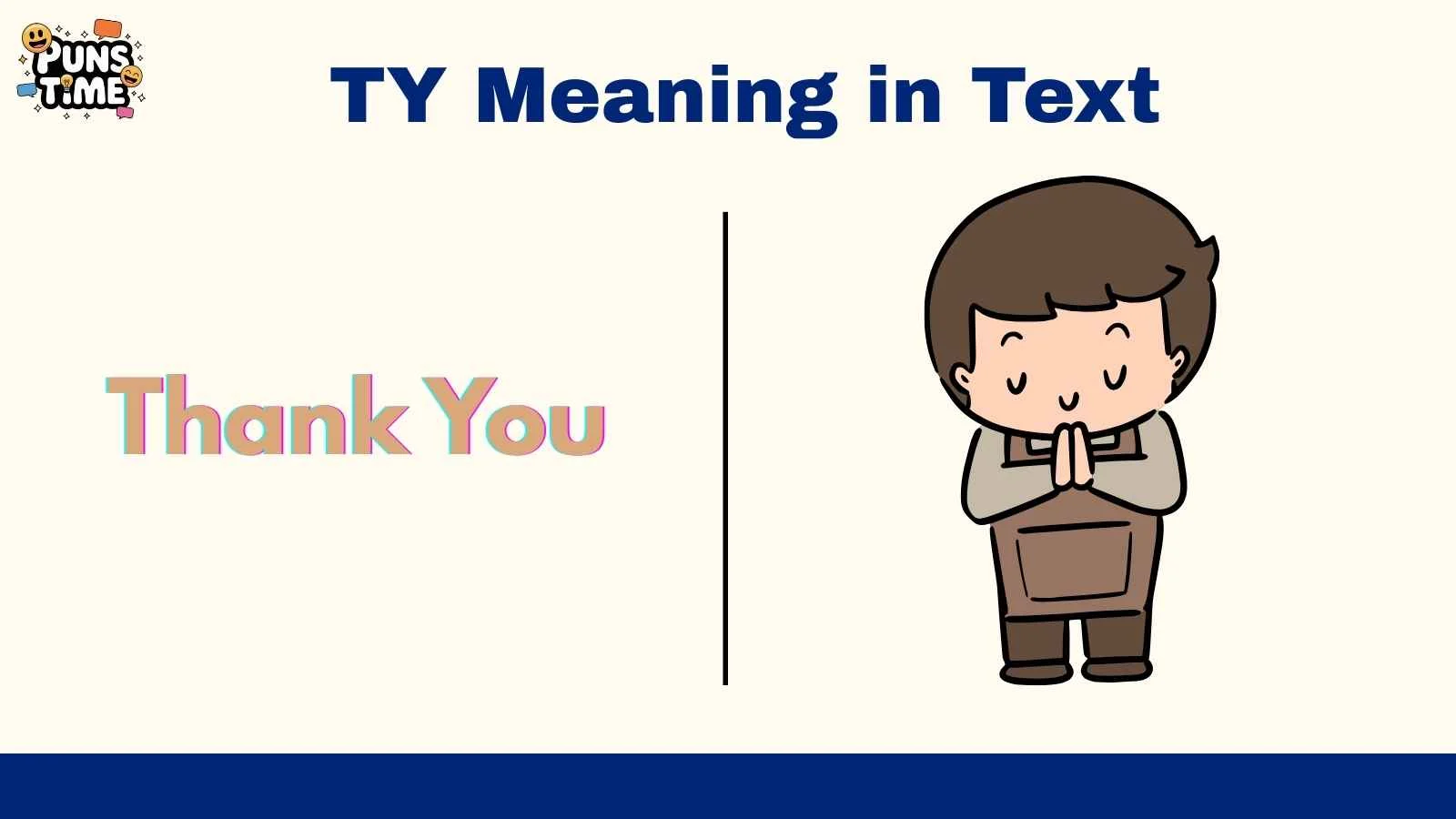
In text messages and online chats, TY simply means “Thank You.” It’s a shortened version used to save time while still showing appreciation. The meaning stays the same across most platforms, but the tone can vary depending on who sends it and how it’s used.
TY is usually:
- Casual
- Friendly
- Quick and informal
However, because it’s so short, some people feel it sounds less warm than “thanks” or “thank you.” Context matters a lot. If someone replies “TY!” with an emoji, it usually feels positive. Without anything extra, it can feel neutral or rushed.
Common situations where TY appears:
- Quick replies in group chats
- Comment sections on social media
- Gaming chats and livestreams
- Work messages where brevity matters
TY is not considered rude, but it’s best used in informal settings rather than formal emails or professional writing.
Full Form, Stands For & Short Meaning of TY
The full form of TY is “Thank You.”
There’s no hidden meaning or alternate expansion in texting culture.
Short meaning:
- TY = Thanks
- TY = Appreciation
- TY = Acknowledgment
People choose TY because:
- It’s fast to type
- It fits character limits
- It matches casual conversation styles
In most cases, TY is interchangeable with:
- Thx
- Thanks
- Tysm (thank you so much)
However, TY is one of the shortest and most neutral options, which is why it’s so widely used.
Origin, History & First Known Use of TY
TY became popular alongside early internet chatrooms, SMS texting, and instant messengers. When character limits were strict and keyboards were small, abbreviations exploded in popularity.
Key moments in its rise:
- Early SMS texting (limited characters)
- Online forums and IRC chats
- Gaming and live chat platforms
- Social media comments
Unlike newer slang, TY has stayed relevant for decades because it serves a simple purpose. It didn’t start as trend slang—it started as a practical shortcut, which is why it still survives today.
How People Use TY in Daily Conversations
People use TY in everyday conversations when speed matters more than formality. It’s often used as a standalone reply or paired with emojis for warmth.
Examples:
- “Sent the file 👍 TY”
- “TY for the info!”
- “Got it, TY 😊”
Tone depends on:
- Emojis
- Capitalization (TY vs ty)
- Message length
Lowercase “ty” feels softer and more casual. Uppercase “TY” can feel enthusiastic—or blunt—depending on context.
TY Meaning Across WhatsApp, Instagram, TikTok & Snapchat
While the meaning stays “thank you,” usage slightly shifts by platform.
- WhatsApp: Quick replies in personal or group chats
- Instagram: Replies to comments or DMs
- TikTok: Comment replies from creators
- Snapchat: Short responses to snaps
On visual platforms, TY is often paired with emojis:
- “TY 💖”
- “TY 🙏”
- “TY!!!”
This helps avoid sounding cold or uninterested.
Different Meanings of TY in Other Fields
Outside texting, TY can mean different things:
- Finance: T-Yield (bond-related term)
- Geography: Country code for Benin (old usage)
- Names: Short for Tyler or Tyrese
Still, in casual online communication, TY almost always means “thank you.”
Common Confusions, Mistakes & Wrong Interpretations
Some people misread TY as:
- Disinterest
- Sarcasm
- Passive response
Common mistakes:
- Using TY in formal emails
- Assuming it’s rude (it usually isn’t)
- Overusing it without context
If warmth matters, add a word or emoji.
Similar Terms, Alternatives & Related Slang
Related abbreviations:
- Thx
- Tysm
- Thnx
- TYSM
- Much appreciated
Examples of TY in Real Chat Situations
- “Sent you the address.” → “TY 😊”
- “Nice post!” → “TY!!”
- “Here’s the answer.” → “ty 🙏”
- “Helped me a lot.” → “TYSM 💖”
How to Reply When Someone Says TY
Easy replies include:
- “You’re welcome!”
- “No problem 😊”
- “Anytime!”
- “Glad to help!”
Match the tone they used.
Is TY Still Popular? Trends & Online Usage
Yes—TY is still widely used. While newer slang comes and goes, TY remains stable because it’s simple and universal. It may not be trendy, but it’s timeless.
FAQs:
1. Is TY rude in texting?
No, it’s usually neutral or friendly.
2. Does TY mean something negative?
Not by default—context matters.
3. Is TY professional?
Not really. Avoid it in formal emails.
4. What’s the difference between TY and thanks?
TY is shorter and more casual.
5. Can TY be sarcastic?
Only if the context makes it that way.
Conclusion:
The TY meaning in text is simple, but how it feels depends on how and where it’s used. At its core, TY means “thank you,” offering a fast and casual way to show appreciation in digital conversations.
It’s popular because it saves time, fits modern chat culture, and works across nearly every platform. While it may feel brief, adding an emoji or extra word can instantly make it warmer.
Whether you’re replying to a comment, chatting with friends, or acknowledging help, TY remains a reliable and widely understood expression. Knowing when and how to use it helps you communicate clearly without overthinking.