If you’ve recently seen “TSTS” in a message and felt confused, you’re not alone. Many people search for TSTS meaning in text because slang changes fast, and new abbreviations pop up daily.
Texting shortcuts help people type quickly, save time, and keep chats casual. But when you don’t know what one means, it can feel like decoding a secret code.
TSTS is one of those short forms that can mean different things depending on the context.
In this guide, you’ll learn what TSTS stands for, how people use it, where it started, and how to reply when someone sends it. We’ll also look at how it appears on platforms like WhatsApp, Instagram, TikTok, and Snapchat.
What Does TSTS Mean in Text & Chat?
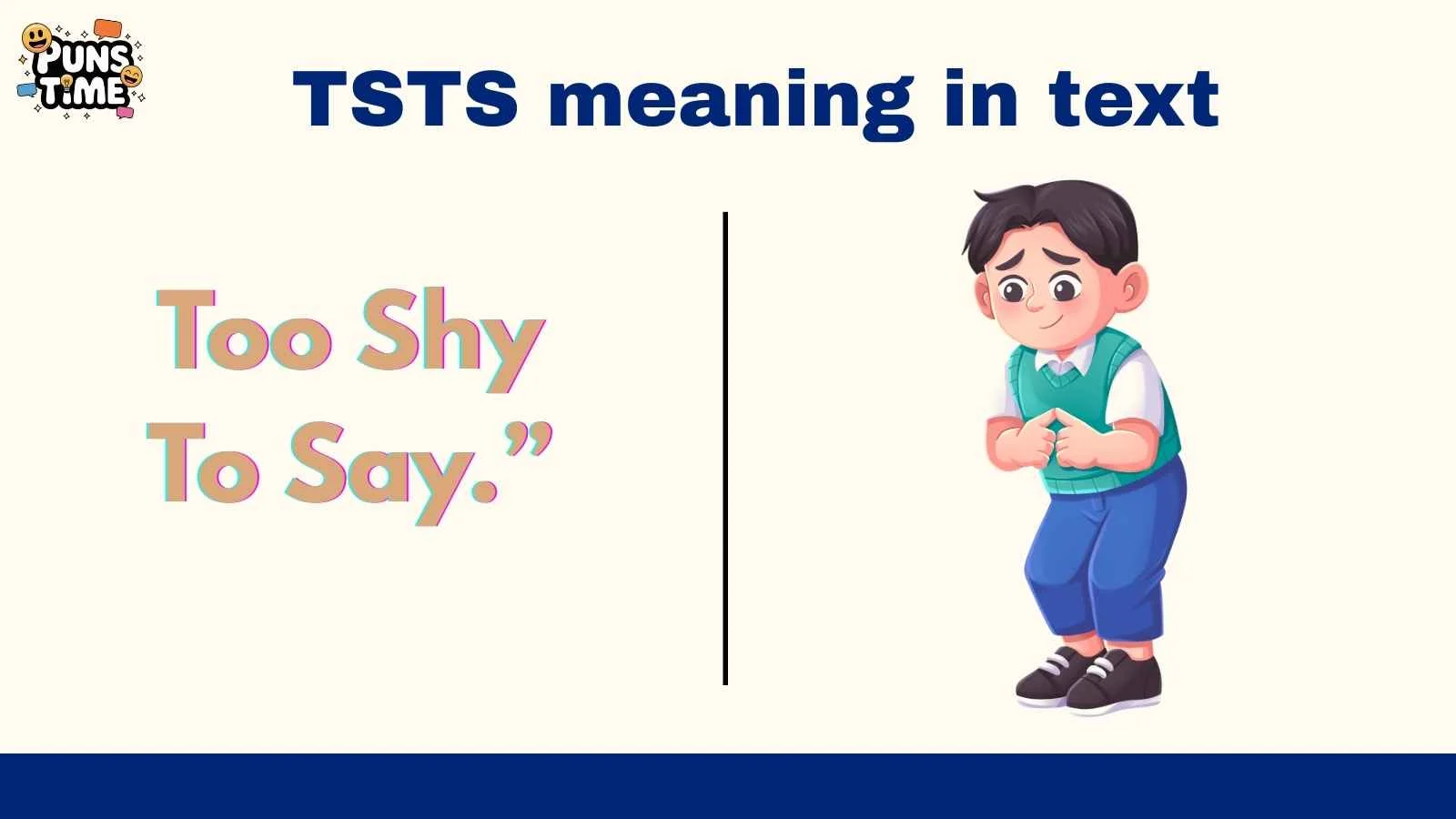
In text and online chat, TSTS most commonly means:
“Too Shy To Say.”
People use it when they feel embarrassed, nervous, or hesitant to express something directly. Instead of typing a long explanation, they use TSTS to keep it short and playful.
For example:
- “I have something to tell you but TSTS 🙈”
- “I was going to compliment you but TSTS 😅”
It usually appears in casual conversations between friends, crushes, or partners. The tone is often light, teasing, or slightly flirty.
However, like many abbreviations, TSTS can have other meanings based on context. That’s why it’s important to look at the conversation before assuming what it means.
In short, when you see TSTS in chat, it often signals:
- Shyness
- Playfulness
- Nervousness
- Holding back feelings
Understanding tone is key. Emojis, previous messages, and the relationship between people all help clarify the meaning.
Full Form, Stands For & Short Meaning of TSTS
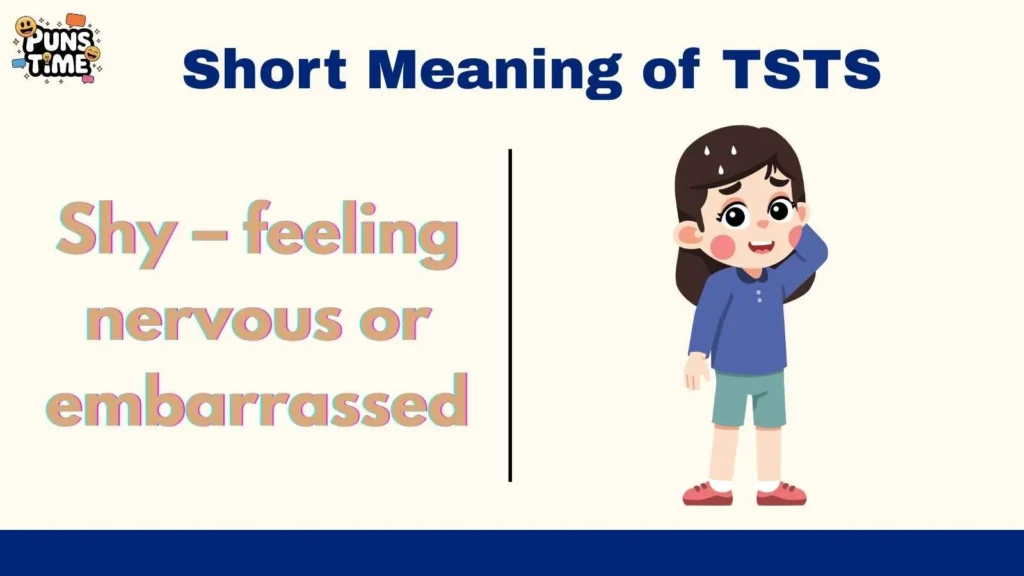
The full form of TSTS in texting is:
Too Shy To Say
Let’s break it down:
- Too – expressing excess
- Shy – feeling nervous or embarrassed
- To Say – not expressing something openly
So, the short meaning of TSTS is:
“I want to say something, but I feel shy about it.”
It’s often used in romantic or friendly chats. Instead of directly confessing a thought, the sender hints at it.
Short meaning summary:
- Hesitant to speak
- Holding back feelings
- Feeling awkward but playful
Some people also use TSTS jokingly. For example:
- “I know the answer but TSTS 😂”
- “Why did you blush? TSTS?”
It adds mystery to the conversation. The other person may reply by asking questions or encouraging them to share.
Origin, History & First Known Use of TSTS
Unlike older abbreviations such as LOL or BRB, TSTS does not have a well-documented origin. It likely developed naturally in online chats and texting culture during the 2010s, when short forms became popular.
As messaging apps grew, people wanted faster ways to express emotions. Saying “I’m too shy to say” repeatedly can be long. So shortening it to TSTS made sense.
Internet slang usually spreads in this way:
- A few users start using it.
- It appears in group chats.
- It spreads through social media.
- It becomes common among younger users.
TSTS likely gained traction on platforms like WhatsApp and Snapchat, where casual and personal chats are common.
Unlike viral slang terms that trend publicly, TSTS feels more private. It is mostly used in direct messages rather than public posts.
How People Use TSTS in Daily Conversations
People use TSTS in many light and emotional moments. It often appears when someone wants attention or wants the other person to guess what they mean.
Here are common situations:
1. Flirting
- “I think you look amazing today but TSTS 😉”
- “There’s something I like about you… TSTS 😌”
2. Playful Teasing
- “I know who you like… TSTS 😂”
- “I heard something about you… TSTS 👀”
3. Emotional Moments
- “I wanted to say something important but TSTS.”
- “You already know… TSTS ❤️”
It creates curiosity. The other person usually replies:
- “Say it!”
- “Tell me!”
- “Don’t be shy!”
TSTS helps build interaction. It keeps the chat going and adds fun tension.
TSTS Meaning Across WhatsApp, Instagram, TikTok & Snapchat
The meaning of TSTS stays mostly the same across platforms, but usage style can differ.
On WhatsApp, TSTS is common in private chats. It’s used in personal conversations between close friends or partners.
Example:
- “I wanted to tell you something yesterday but TSTS 😅”
On Instagram, it may appear in DMs or story replies.
Example:
- “You looked stunning in your story but TSTS 🙈”
TikTok
On TikTok, TSTS might appear in comments, but it’s less common than trending slang.
Example:
- “I relate so much but TSTS 😂”
Snapchat
On Snapchat, where conversations are casual and quick, TSTS fits naturally.
Example:
- “I almost sent something risky… TSTS 😭”
Different Meanings of TSTS in Other Fields
While texting meaning is most common, TSTS can have different meanings in other contexts:
- Technical fields: It may represent internal system codes.
- Education: Could be an acronym for program names.
- Business: Sometimes used as an internal abbreviation.
However, these uses are rare in everyday chat. In most casual conversations, TSTS refers to “Too Shy To Say.”
Always check the setting:
- Romantic chat → likely texting meaning
- Office email → possibly something else
Context matters.
Common Confusions, Mistakes & Wrong Interpretations
People sometimes misunderstand TSTS. Here are common mistakes:
❌ Thinking it means something negative
❌ Assuming it’s rude
❌ Confusing it with other slang
It is usually soft and playful. It is not aggressive or insulting.
Some confuse it with:
- “TBT” (Throwback Thursday)
- “TS” (Talk Soon)
- “TTYL” (Talk To You Later)
If unsure, just ask:
“What does TSTS mean?”
That’s better than guessing wrong.
Similar Terms, Alternatives & Related Slang
If someone doesn’t use TSTS, they may use similar phrases like:
- “I can’t say 🙈”
- “You already know 😉”
- “No comment 😅”
- “Too shy lol”
- “IDK if I should say…”
You may also like:
- LMK Meaning in Text
- WYLL Meaning in Chat
- IMO Meaning Online
(Internal linking suggestion: Link to related abbreviation guides to boost SEO.)
These slang terms help express emotions quickly.
Examples of TSTS in Real Chat Situations
Here are natural chat examples:
- A: “Why were you smiling at your phone?”
B: “TSTS 😌” - A: “Do you like someone?”
B: “Maybe… TSTS 🙈” - A: “What were you about to text?”
B: “Nothing… TSTS 😂” - “I was going to confess but TSTS 😭”
- “You know why… TSTS ❤️”
These examples show how playful and emotional it can be.
How to Reply When Someone Says TSTS
If someone says TSTS, you can reply in fun ways:
Encouraging:
- “Come on, tell me!”
- “Don’t be shy 😄”
Playful:
- “Now I’m curious!”
- “You HAVE to say it 👀”
Flirty:
- “I think I know… 😉”
- “Say it and I’ll say mine 😌”
Your reply depends on your relationship and tone.
Is TSTS Still Popular? Trends & Online Usage
TSTS is not as viral as major slang terms, but it remains popular in private chats. It works best in personal messages rather than public posts.
Slang trends change fast. Some terms go viral on TikTok, while others stay low-key. TSTS falls into the second category.
It is still used by:
- Teenagers
- Young adults
- People in romantic chats
It may not trend globally, but it continues to appear in everyday conversations.
FAQs:
1. What does TSTS stand for in texting?
It stands for “Too Shy To Say.”
2. Is TSTS used for flirting?
Yes, it is often used in flirty or playful conversations.
3. Can TSTS have different meanings?
Yes, but in chat it usually means “Too Shy To Say.”
4. Is TSTS rude?
No. It is usually friendly and light.
5. How should I respond to TSTS?
You can say “Tell me!” or respond playfully to keep the chat going.
6. Is TSTS common on Instagram?
It appears mostly in DMs and story replies.
Conclusion:
Now you understand the full TSTS meaning in text. It usually stands for “Too Shy To Say” and is used when someone feels nervous, playful, or hesitant to express something directly. It adds mystery and fun to conversations, especially in flirty or emotional chats.
While it may not be the most viral slang term online, TSTS continues to live in private messages across WhatsApp, Instagram, TikTok, and Snapchat. The key to understanding it is context. Always look at the tone and emojis used in the message.
Next time someone sends “TSTS,” you’ll know exactly what they mean — and how to reply confidently.