If you’ve ever been mid-chat and suddenly seen “TMI,” you’re not alone. The phrase pops up everywhere from casual texts to viral social posts often stopping conversations in their tracks.
People search for TMI meaning in text because it’s short, informal, and highly context-dependent. One minute it’s playful, the next it’s a polite boundary. Understanding what TMI means helps you read social cues, avoid awkward moments, and respond appropriately online.
In texting culture, brevity matters, and acronyms like TMI pack a lot of meaning into three letters. This guide breaks down what TMI means, where it came from, how it’s used across platforms, and how to reply without missing a beat. Friendly, clear, and practical let’s decode TMI together.
What Does TMI Mean in Text & Chat?
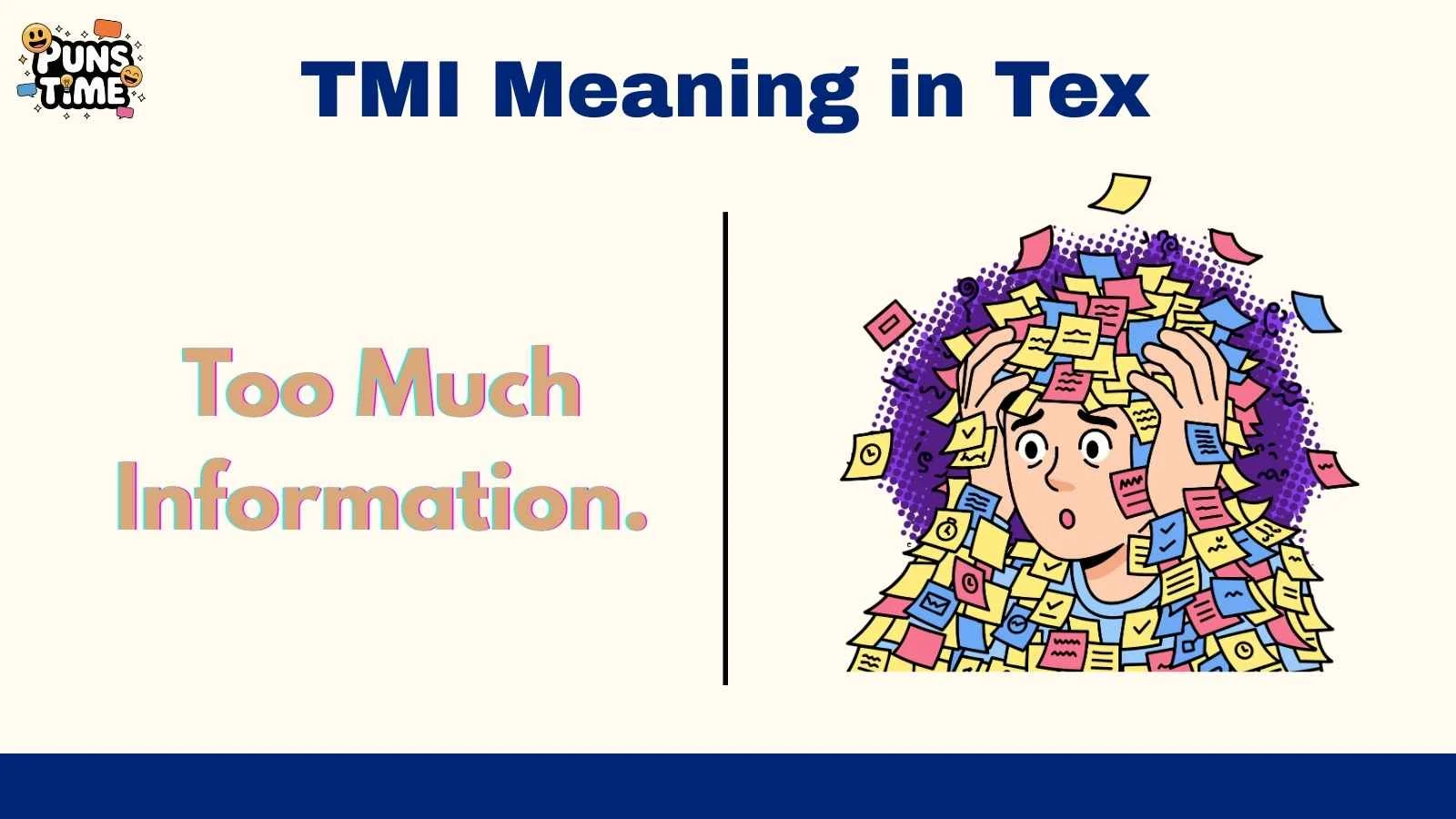
In text and chat, TMI means “Too Much Information.” It’s a reaction—often immediate—to details that feel overly personal, graphic, or unnecessary for the moment. When someone types TMI, they’re usually signaling a boundary without escalating the situation. The tone can vary widely depending on context: playful among friends, awkward in group chats, or gently corrective in professional spaces.
TMI isn’t always negative. Sometimes it’s said with humor, especially when friends overshare intentionally for laughs. Other times, it’s a soft stop sign—“I didn’t need to know that.” Because texting lacks tone of voice, TMI relies heavily on shared context and relationship dynamics.
Common situations where TMI appears include:
- Graphic health details
- Intimate relationship stories
- Bathroom or bodily function talk
- Oversharing in work or class chats
TMI helps conversations self-correct. Instead of arguing or shaming, it provides a shorthand that keeps things moving. Understanding this nuance is key: the same three letters can mean “LOL, stop” or “Please don’t share that here.” Reading the room—and the relationship—matters.
Full Form, Stands For & Short Meaning of TMI
TMI stands for Too Much Information. That’s the full form, and it’s exactly as direct as it sounds. The short meaning is simple: the speaker feels the information shared exceeded what was necessary, appropriate, or comfortable.
In texting shorthand:
- Full form: Too Much Information
- Short meaning: You shared more than I wanted to know
What makes TMI powerful is its efficiency. Instead of explaining discomfort, people use TMI to instantly communicate limits. It’s not a technical term—there’s no strict rulebook—but its meaning is widely understood across English-speaking internet culture.
TMI can function as:
- A reaction (“TMI 😅”)
- A warning (“Careful, that’s TMI”)
- A joke (“Okay, TMI but go on 😂”)
Because it’s informal, TMI fits best in casual conversations. In formal writing or professional emails, it’s usually avoided. Still, its clarity keeps it popular in fast-moving digital chats.
Origin, History & First Known Use of TMI
The phrase “too much information” existed long before texting, but TMI as an abbreviation gained traction in the late 1990s and early 2000s. Early internet forums, chat rooms, and email chains favored abbreviations to save time and space—perfect conditions for TMI to thrive.
TMI became especially common alongside other early internet shorthand like LOL, BRB, and OMG. As online communities grew, so did casual oversharing. TMI emerged as a cultural response—a quick way to set boundaries without confrontation.
By the time smartphones and SMS texting became mainstream, TMI was already well-established. Social media platforms then amplified its use, turning it into a meme-ready, reaction-style acronym. Today, it’s understood across generations, from early internet users to Gen Z.
Its staying power comes from relevance. As long as people overshare online, TMI will have a job to do.
How People Use TMI in Daily Conversations
In everyday texting, TMI shows up as a reaction rather than a statement. People rarely plan to say it—it’s instinctive. The context determines whether it lands as funny, awkward, or corrective.
Typical daily uses include:
- Friends reacting to gross stories
- Group chats shutting down oversharing
- Light teasing between close people
- Setting boundaries without drama
Examples:
- “I didn’t need to know that… TMI 😬”
- “LOL TMI but I asked for it”
- “Okay that’s officially TMI”
Tone cues matter. Emojis soften the message, while caps or abrupt replies can feel harsh. Among friends, TMI often strengthens communication by clarifying comfort levels quickly.
TMI Meaning Across WhatsApp, Instagram, TikTok & Snapchat
While the core meaning stays the same, TMI adapts slightly by platform.
- WhatsApp: Used in private or group chats to stop oversharing. Often paired with emojis.
- Instagram: Appears in comments or DMs reacting to captions, stories, or confessions.
- TikTok: Common in comment sections reacting to personal storytimes. Sometimes playful, sometimes critical.
- Snapchat: Used in quick replies to snaps or chats when something feels overly personal.
Platform culture shapes tone. TikTok TMI can be sarcastic. WhatsApp TMI is usually gentler. Snapchat TMI is fast and casual. Same acronym, different vibes.
Different Meanings of TMI in Other Fields
While “Too Much Information” dominates, TMI can mean different things in specific fields:
- Medical: Transcendental Meditation International
- Technology: Technical Management Institute
- Business: Total Market Index (rare, context-specific)
These meanings are uncommon in texting. In casual chats, TMI almost always refers to oversharing. Context makes the difference—acronyms are flexible, but conversation clues guide interpretation.
Common Confusions, Mistakes & Wrong Interpretations
A common mistake is assuming TMI is always rude. It’s not. In many cases, it’s playful or protective. Another confusion is using TMI about factual details rather than personal ones—TMI usually targets personal oversharing.
Misinterpretations happen when:
- Tone isn’t clear
- Relationship context is weak
- Emojis are missing
If unsure, ask or clarify. Digital communication leaves room for misunderstanding, and TMI is no exception.
Similar Terms, Alternatives & Related Slang
Related expressions include:
- Overshare
- Didn’t need to know
- Yikes
- No filter
- That’s a lot
Internal linking suggestions:
- Link to “LOL Meaning in Text”
- Link to “OMG Full Form in Chat”
- Link to “BRB Meaning Online”
These help readers explore related slang naturally.
Examples of TMI in Real Chat Situations
Quick examples:
- “I had food poisoning all night.” → “TMI 😭”
- “Here’s every detail of my breakup…” → “Okay TMI but I’m listening 👀”
- “Doctor said my rash—” → “TMI, please stop 😅”
Bullet-friendly, fast, and clear—just like real chats.
How to Reply When Someone Says TMI
Best replies depend on intent:
- Apologize lightly: “Oops, my bad 😅”
- Laugh it off: “LOL noted”
- Change topic: “Anyway—how was your day?”
Don’t argue. TMI is a boundary cue, not an attack.
Is TMI Still Popular? Trends & Online Usage
Yes—TMI is still widely used. While slang evolves, TMI remains relevant because oversharing hasn’t gone anywhere. It appears in memes, comments, and daily chats across platforms. Its clarity and brevity keep it alive, even as new slang cycles in and out.
FAQs:
1. Is TMI rude in texting?
Not usually. It depends on tone and context.
2. Can TMI be used jokingly?
Yes, especially among friends.
3. Is TMI professional?
No, it’s best kept casual.
4. What’s the opposite of TMI?
“Details, please” or “Tell me more.”
5. Do emojis change TMI’s tone?
Absolutely—they soften or amplify meaning.
Conclusion:
Understanding the TMI meaning in text helps you navigate digital conversations with confidence. It’s a small acronym with big social power—setting boundaries, adding humor, and keeping chats comfortable.
Whether you see it on WhatsApp, TikTok, or a late-night group chat, TMI is a cue to pause, laugh, or pivot. The key is context.
Read the relationship, note the tone, and respond with ease. As online communication continues to evolve, TMI remains a useful, human shorthand—proof that sometimes, saying less really does say more.