If you’ve come across the abbreviation TMB in a text message or social media chat, you’re not alone. Many people search for “TMB meaning in text” because the acronym shows up across platforms like WhatsApp, Instagram, Snapchat, and TikTok but its meaning isn’t always obvious at first glance.
Like most online slang, TMB developed as a quick, casual way to express something without typing a full sentence.
This guide breaks down what TMB stands for, where it comes from, how people use it today, and the different meanings it can carry depending on the context.
You’ll also see real chat examples, similar slang terms, common mistakes, and tips on how to respond when someone sends you TMB.
Whether you’re catching up with online trends or simply want to avoid confusion, this friendly, easy-to-read guide will help you understand exactly what TMB means and how to use it naturally.
What Does TMB Mean in Text & Chat?
In everyday texting, TMB most commonly means “Text Me Back.” It’s a simple request: the sender wants you to respond when you can. People use TMB when they’re waiting for updates, asking for details, or hoping to continue a conversation later.
Because abbreviations help keep messages short and fast, TMB is popular among teens, young adults, and anyone who chats frequently on mobile apps.
In some cases, TMB can also express urgency—like “hey, don’t forget to reply”—but it’s usually polite rather than demanding. The tone depends on context and the relationship between the people chatting.
Less common meanings exist, but within everyday texting and social platforms, “Text Me Back” remains the standard interpretation.
Full Form, Stands For & Short Meaning of TMB
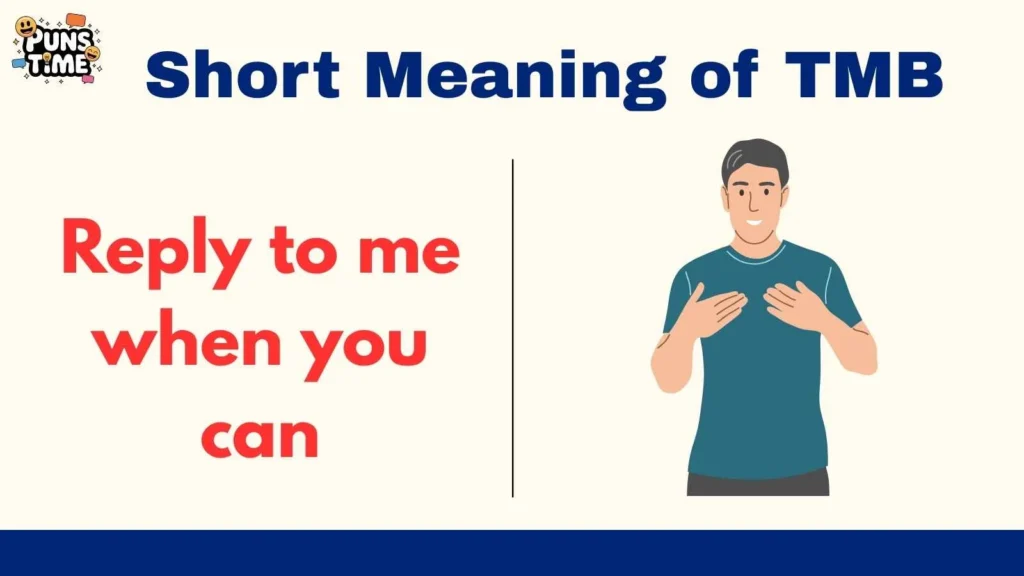
Here’s a quick breakdown of TMB’s most recognized meanings:
- Primary Full Form: Text Me Back
- Short Meaning: Reply to me when you can
- Tone: Casual, friendly, sometimes slightly urgent
- Used In: Text messages, social media DMs, group chats
Other possible meanings, though less common in casual messaging, include:
- “Tweet Me Back” – among Twitter users
- “Told My Bestie” – less frequent but used in gossip-style chats
- “To My Baby” – in intimate or playful conversations
However, unless context suggests otherwise, the safe interpretation is Text Me Back.
Origin, History & First Known Use of TMB
TMB emerged alongside early SMS texting culture in the late 1990s and early 2000s. When mobile phones charged per character and screens were tiny, short acronyms became essential.
The abbreviation likely developed around the same time as similar message-based slang such as BRB (Be Right Back) and TTYL (Talk To You Later). While the exact first use isn’t documented, TMB gained traction as texting became mainstream and people looked for quick ways to ask for a response.
With the rise of smartphones and social platforms, TMB carried over into new digital environments. Today it remains a recognizable, though slightly less dominant, piece of internet shorthand. Its simplicity keeps it alive, even as more expressive messaging features—like emojis, reactions, and voice notes—gain popularity.
How People Use TMB in Daily Conversations
People use TMB whenever they want a reply—but don’t want to sound pushy. It’s a softer version of “respond ASAP” and blends well with casual talk.
Common uses include:
- Asking someone to follow up later
- Keeping the conversation going
- Signaling that you’re waiting for info
- Ending a chat while reminding the other person to reply
- Checking in with someone who hasn’t responded yet
Because TMB is short, it fits well at the end of messages:
- “Let me know what time works. TMB.”
- “I’m heading into a meeting. TMB after.”
- “Sent you the details—TMB!”
It works in friendly, family, romantic, and even work-casual settings, as long as the tone is appropriate.
TMB Meaning Across WhatsApp, Instagram, TikTok & Snapchat
While the core meaning stays the same, tone and usage vary slightly by platform:
Users send TMB in group chats, family chats, and personal conversations. It often ends messages that need follow-up.
In DMs, TMB is used when sharing reels, updates, or story replies. It can mean, “Get back to me after you watch this.”
TikTok
Creators and viewers occasionally use TMB in comments or DMs, especially when continuing a conversation or asking for updates on content.
Snapchat
Because Snapchat messages disappear, TMB can mean “snap me back” or “reply with another snap,” blending texting with visual communication.
Different Meanings of TMB in Other Fields
Outside casual texting, TMB can refer to completely different terms:
- Finance: “Trust Mark Bank” or “Tamilnad Mercantile Bank”
- Medicine: “Tumor Mutational Burden”
- Transportation: “Transports Metropolitans de Barcelona” (a transit system)
- Technology: “Time Machine Backup”
These meanings are context-specific and not used in everyday chatting. When someone sends TMB in a simple text or DM, the intended meaning is “Text Me Back.”
Common Confusions, Mistakes & Wrong Interpretations
Because acronyms evolve, TMB can sometimes be misunderstood. Common mistakes include:
- Thinking it means “Talk Me Back” (not a standard term)
- Reading it as “Too Much Bad” due to confusion with slang
- Mixing it up with TBD (To Be Determined) or TBH (To Be Honest)
- Assuming the sender is demanding a reply, when the tone is usually casual
When in doubt, check context: If it appears at the end of a message, the meaning is almost always Text Me Back.
Similar Terms, Alternatives & Related Slang
Here are related acronyms that carry a similar meaning:
- BRB – Be Right Back
- TTYL – Talk To You Later
- PMB – Please Message Back
- LMK – Let Me Know
- HML – Hit Me Later
- MSG me – Message me
These terms all relate to communication or requesting a response.
Examples of TMB in Real Chat Situations
Here are natural, relatable examples:
- “Just reached the café. TMB when you’re close.”
- “Sent you the playlist 🎶. TMB!”
- “Can’t talk now. TMB after class.”
- “I need your final answer—TMB ASAP 🙏.”
- “Dropped the file in your email. TMB when viewed.”
How to Reply When Someone Says TMB
Your response depends on your availability:
- “Sure, I’ll text you later.”
- “Got it! I’ll reply after work.”
- “Will do 👍.”
- “Okay, give me a few minutes.”
- “No problem, I’ll get back to you soon.”
If you’re unavailable for a long time, set expectations politely.
Is TMB Still Popular? Trends & Online Usage
TMB is still used, but it’s less common than it was in early texting days. Modern users lean toward:
- Emojis
- Quick reactions
- Voice notes
- “Text me” or “Reply when free”
However, because TMB is short and universal, it remains relevant—especially among people who prefer minimal text or are used to older SMS-style slang. Searches for “TMB meaning in text” continue rising as younger users encounter the abbreviation for the first time.
FAQs:
1. What does TMB mean in texting?
It primarily means Text Me Back.
2. Is TMB rude or pushy?
No. It’s usually polite and casual unless paired with urgent language like “ASAP.”
3. Can TMB mean something else on Snapchat?
Sometimes it can mean “snap me back,” but the common meaning remains “text me back.”
4. Is TMB used in professional messages?
It can be, but it’s better to use full phrases like “Please reply when available.”
5. What’s the difference between TMB and PMB?
TMB = Text Me Back.
PMB = Please Message Back.
Conclusion:
Understanding the meaning of TMB in text helps you navigate online conversations with confidence.
Whether someone sends it at the end of a message, uses it casually on social media, or includes it during a conversation that needs follow-up, TMB almost always stands for Text Me Back.
Its ease, clarity, and brevity are why the abbreviation has stayed relevant for decades.
Although messaging styles evolve, TMB still works as a friendly reminder to reply when you have time. Now that you know its meaning, variations, and common uses, you can recognize the tone behind it and respond naturally.
As with most slang, context matters—but in most cases, the message is simple: someone just wants to hear back from you.