If you’ve spent time texting, scrolling through TikTok comments, or chatting on Snapchat, you’ve probably come across the abbreviation “SMH.” It’s one of those online expressions that shows up everywhere yet many people still pause and wonder what it really means.
Because slang evolves quickly, users often search for “SMH meaning in text” to avoid misunderstandings and keep up with modern digital communication.
In this guide, we’ll break down exactly what SMH means, why people use it, when to use it, and what to avoid. We’ll also explore its history, different interpretations, platform-specific meanings, and real chat examples to make everything crystal clear.
Whether you’re a beginner, a parent trying to decode Gen Z messages, or just curious, this article will help you understand SMH with ease and confidence.
What Does SMH Mean in Text & Chat?
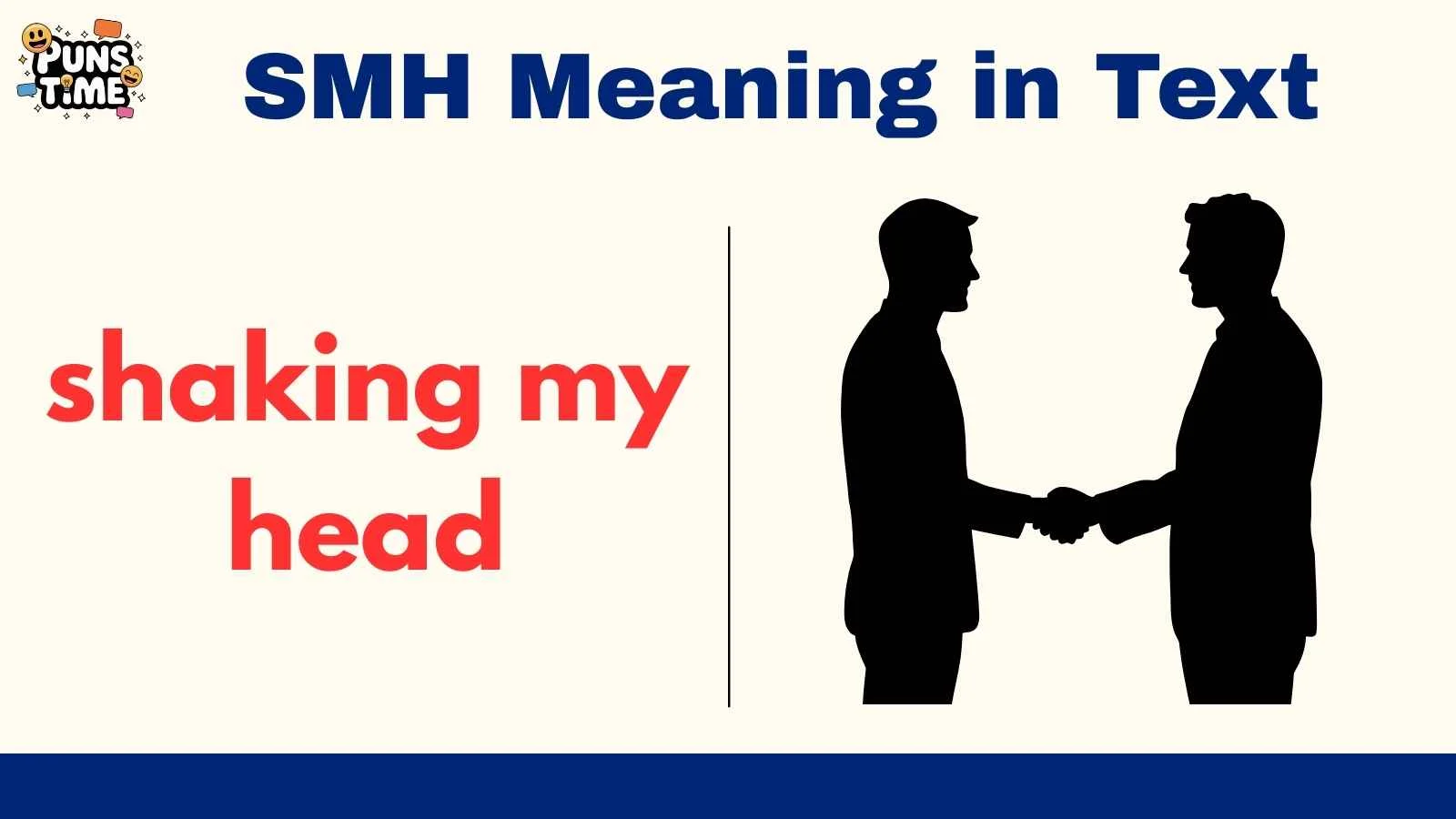
SMH stands for “shaking my head.” It’s an internet slang expression used to show disappointment, disbelief, frustration, or mild disapproval. Instead of typing out a long reaction, people use SMH as a quick emotional cue.
In everyday text conversations, SMH is a shorthand response to something surprising or irritating. For example, if someone tells you they forgot their password again, you might reply with, “SMH, that’s the third time this week.”
SMH doesn’t always imply anger. Often, it’s more playful or sarcastic—like rolling your eyes in text form. Tone depends on the context, the people chatting, and the topic.
People use SMH because:
- It conveys emotion instantly
- It keeps messages short
- It’s widely understood online
- It fits perfectly into casual, modern communication
Whether reacting to dramatic celebrity news or describing daily annoyances, SMH helps express a feeling without needing extra explanation. That’s what makes it such a popular part of digital language.
Full Form, Stands For & Short Meaning of SMH
The abbreviation SMH has a straightforward full form:
- S — Shaking
- M — My
- H — Head
So, SMH = Shaking My Head.
Its short meaning can be summarized as:
➡️ A text expression showing disapproval, frustration, disbelief, or annoyance.
Common interpretations include:
- “I can’t believe this.”
- “Why would someone do that?”
- “This is disappointing.”
- “This makes no sense.”
Although SMH has a single official full form, people sometimes expand it humorously:
- “Smack My Head” (joking exaggeration)
- “So Much Hate” (less common and context-specific)
However, these aren’t considered the standard meaning. The universally accepted definition across all platforms remains “shaking my head.”
Because SMH is short, expressive, and easy to type, it fits naturally into texting, meme culture, and everyday chat discussion—especially when reacting to surprising or unnecessary behavior.
Origin, History & First Known Use of SMH
The slang term SMH emerged in the early days of the internet, particularly during the rise of message boards and chat rooms in the late 1990s and early 2000s. It became more widespread as SMS texting and instant messaging grew popular.
Linguists and digital slang trackers identify Urban Dictionary entries from the early 2000s as some of the earliest documented examples of SMH online. The term spread quickly among online communities because it served as a simple nonverbal cue—similar to emojis today.
By the mid-2010s, SMH had become a mainstream expression thanks to:
- Twitter trends
- Meme culture
- Viral reactions
- Celebrity usage
- Smartphone texting shortcuts
Today, SMH has transitioned from niche internet slang to a universal digital expression. Even people who don’t use slang often recognize SMH as part of casual online vocabulary.
How People Use SMH in Daily Conversations
SMH is extremely flexible and can be used in all kinds of everyday chats. It helps communicate tone in messages where body language isn’t visible.
Common everyday uses:
- Reacting to mistakes:
“I lost my wallet again.”
“SMH…” - Expressing disbelief:
“She said the Earth is flat.”
“SMH that people still believe that.” - Showing disappointment:
“He skipped practice again.”
“SMH. Not surprising.” - Playful teasing:
“I ate the last slice of pizza 😅”
“SMH, typical.” - Commenting on drama:
“They’re fighting in the comments again.”
“SMH this app is wild.”
Because SMH is casual, it appears everywhere—from private chats to public replies. It’s especially effective when you want to keep your response short but expressive.
SMH Meaning Across WhatsApp, Instagram, TikTok & Snapchat
Even though SMH means the same thing everywhere, its tone and usage can vary across platforms.
- Used in personal chats or family groups
- Often paired with emojis like 🙄 or 🤦
- Common for expressing real-life frustration
- Appears in comments reacting to news, memes, or drama
- Used sarcastically under viral posts
- Often part of meme captions
TikTok
- Used in captions or comments to react to shocking videos
- Common in stitched or duetted content
- Adds a comedic layer to reactions
Snapchat
- Sent as a quick reply to snaps
- Often used jokingly between friends
- Can be paired with reaction Bitmojis
Despite slight differences in tone, the meaning remains consistent: shaking my head in disbelief or frustration.
Different Meanings of SMH in Other Fields
While “shaking my head” is the universal meaning, SMH can have other interpretations depending on the field—though these are far less common.
Technical & Niche Uses
- Sydney Morning Herald (Australian newspaper)
- SMH Group (various companies)
- So Much Hate (contextual slang)
- Servo-Motor Handling (engineering term)
- Surface-Mount Holder (electronics)
These meanings are usually recognized only in their specific industries. When used in everyday texting or social media, SMH almost always refers to “shaking my head.”
Common Confusions, Mistakes & Wrong Interpretations
Because abbreviations vary across platforms, people often misinterpret SMH—especially if they’re new to internet slang.
Common misunderstandings:
- Thinking SMH is angry instead of disappointed
It can express annoyance, but it’s not usually aggressive. - Confusing it with emojis
Some think SMH replaces the 🤦 emoji, but both can be used together. - Assuming it has multiple official full forms
Only “shaking my head” is the real one. - Reading it as a serious insult
Most of the time, SMH is casual—not harsh. - Mixing it up with similar abbreviations
Like SMDH, SMA, or SMFH (which have stronger meanings).
Understanding the tone and context is the key to using SMH correctly.
Similar Terms, Alternatives & Related Slang
Here are slang expressions similar to SMH that convey frustration, disbelief, or emotional reactions:
- SMDH — Shaking My Damn Head
- SMFH — Shaking My Freaking/… Head
- FR — For Real
- Bruh — Expression of disbelief
- Facepalm — Equivalent to 🤦
- OMG — Oh My God
- LOL smh — Laughing but disappointed
- C’mon — Annoyed reaction
These alternatives add variety and let you adjust your tone depending on the situation.
Examples of SMH in Real Chat Situations
Text Examples
- Friend: “I stayed up until 4am and didn’t study 😭”
You: “SMH, you’re gonna regret it tomorrow.” - Friend: “Guess who forgot their keys again?”
You: “SMH bro 😂” - Coworker: “He emailed the wrong client.”
You: “SMH… that’s not good.”
Social Media Examples
- “People really arguing about pineapple on pizza again… SMH.”
- “He cheated on her and still acts surprised she left SMH.”
Family Chat Examples
- “Dad parked in the wrong spot again.”
“SMH 😅”
These examples show how flexible the expression is across different contexts and relationships.
How to Reply When Someone Says SMH
How you respond depends on the tone of the conversation.
If they’re disappointed in you
- “My bad, I’ll fix it.”
- “I know 😅 I messed up.”
- “You’re right. Won’t happen again.”
If they’re joking
- “LMAO I know, right?”
- “😂 You still love me though.”
If they’re reacting to news
- “Seriously, what was that?”
- “Wild, isn’t it?”
- “People are unbelievable.”
If you want to match their tone
- “SMH fr.”
- “Exactly. I can’t with this.”
Each reply helps keep the flow natural while acknowledging the meaning.
Is SMH Still Popular? Trends & Online Usage
Yes—SMH is still very popular, though its usage has evolved. With the rise of emojis and reaction GIFs, people sometimes express the same emotion visually instead of with text. However, SMH remains widely used because it’s:
- Quick
- Universal
- Easily understood
- Perfect for commenting on drama or disappointment
Current trends show that SMH continues to appear frequently in:
- TikTok comment sections
- Twitter/X replies
- Reddit discussions
- Instagram memes
- Group chats
While newer slang emerges all the time, SMH has become a staple of online culture and isn’t going away anytime soon.
FAQs:
1. What does SMH mean in texting?
SMH means “shaking my head,” expressing disappointment or disbelief.
2. Is SMH rude?
Not usually. It can be sarcastic, joking, or mildly annoyed depending on context.
3. What is the difference between SMH and SMDH?
SMDH is a stronger version meaning “shaking my damn head.”
4. Do people still use SMH in 2025?
Yes. It remains one of the most common internet slang reactions.
5. Can you use SMH in formal writing?
No. SMH is casual slang meant for personal chats and social media.
Conclusion:
SMH has become one of the most recognizable expressions in digital communication. Whether someone is annoyed, amused, disappointed, or simply reacting to something ridiculous, SMH helps convey emotion quickly and clearly.
Understanding its meaning, origin, and usage makes texting smoother and prevents misunderstandings especially in today’s fast-moving online world.
From Instagram comments to family chats, SMH fits naturally into almost any conversation. Now that you know when and how to use it (and what to avoid), you can confidently navigate modern slang and respond appropriately.
As online communication continues to evolve, SMH remains a timeless expression of disbelief and frustration that people of all ages can understand.