If you’ve come across ION in a text, chat, or social media post, you might wonder what it actually means. With new slang appearing every month, it’s easy to get lost especially when people shorten everything in fast online conversations.
That’s why so many users search for “ION meaning in text”, hoping for a clear explanation they can understand right away.
The good news? ION is a simple, everyday shorthand, and once you know what it stands for, you’ll start noticing it everywhere. In this article, you’ll learn exactly what ION means, where it came from, how people use it across platforms like WhatsApp, Instagram, TikTok, and Snapchat, and how to reply when someone sends it to you.
We’ll also explore other meanings of ION in science, technology, and pop culture plus give you real chat examples to make everything crystal clear.
What Does ION Mean in Text & Chat?
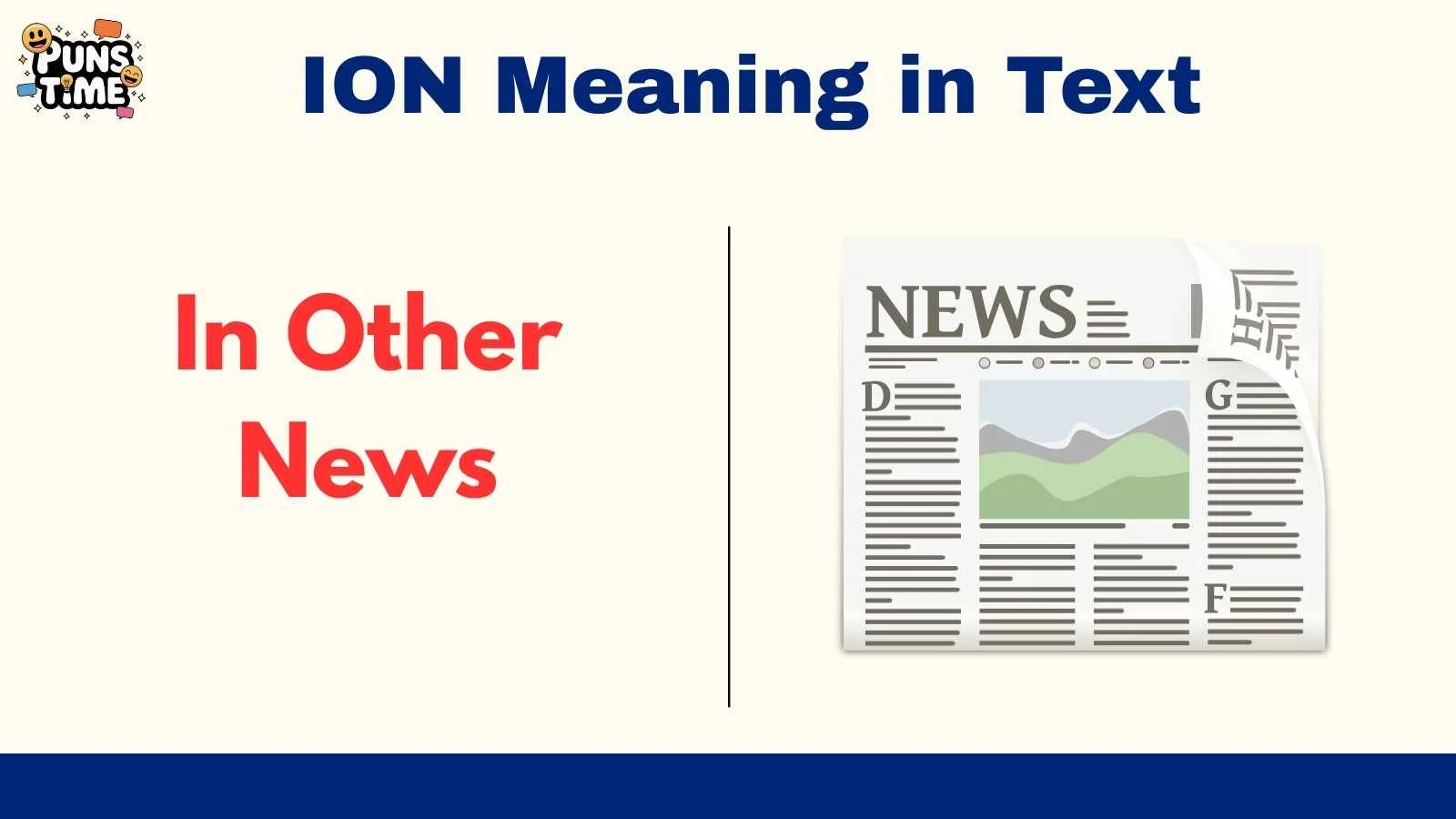
In texting, ION most commonly means “In Other News.” It’s a casual way to switch topics or introduce a new piece of information without sounding abrupt or rude.
People often use ION when:
- They want to change the subject smoothly
- They’re adding something random or unrelated
- They need a light transition in a conversation
- They’re commenting on something happening in their life
For example:
“I’m bored at home… ION, have you watched the new episode yet?”
Here, ION lets the speaker shift from complaining to a new topic naturally.
Unlike many slang terms, ION isn’t emotional, sarcastic, or flirty by itself. It simply signals a topic change. This makes it useful in casual chat, group messages, and social posts where tone changes quickly.
You’ll mostly see it in lowercase (ion) or uppercase (ION)—both are correct and carry the same meaning.
Full Form, Stands For & Short Meaning of ION
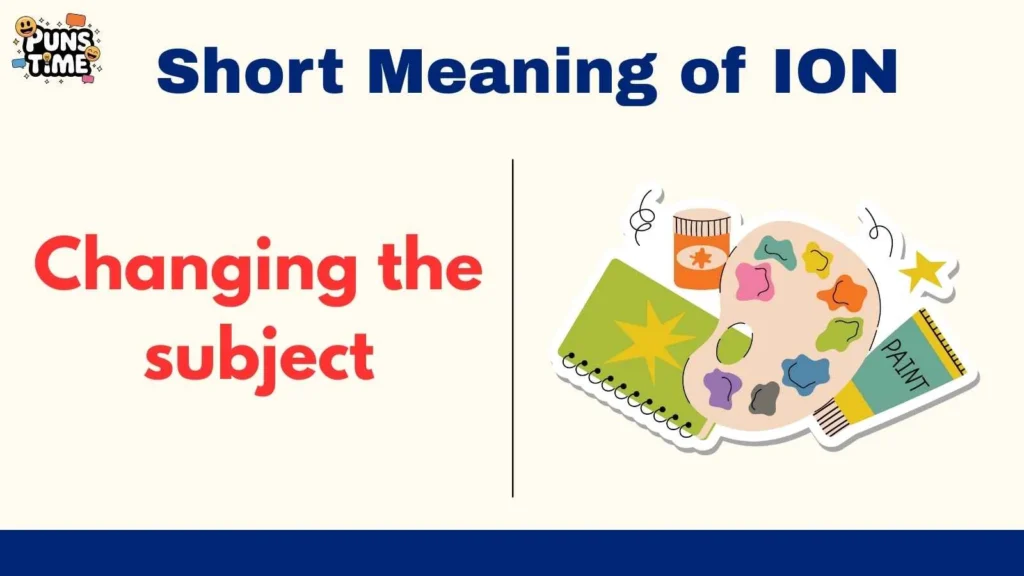
Full Form: In Other News
Short Meaning: Changing the subject / here’s something else
Type: Slang abbreviation used in texting and social media
Quick Breakdown
- I → In
- O → Other
- N → News
When used in everyday conversation, ION works like a soft “by the way” or “anyway,” but with a more modern, internet-style feel.
Examples
- “ION, I finally cleaned my room 😅”
- “She’s not responding… ion, I’m going to bed.”
- “I’m tired today. ION, we have a test tomorrow.”
Some people interpret ION as “I don’t” (because it sounds similar when spoken quickly—“ion know” meaning “I don’t know.”) However, that usage is mostly slang in certain communities and isn’t the mainstream meaning.
Origin, History & First Known Use of ION
The abbreviation ION began appearing in internet forums and early social media platforms in the late 2000s and early 2010s. It likely grew from the phrase “In other news…”, which journalists have used for decades when shifting topics during news broadcasts.
As texting became faster and more shorthand-driven, people shortened the phrase to ION. Social platforms like Twitter (X), Tumblr, and Instagram Stories helped the abbreviation spread widely, since users often needed quick transitions between short posts.
By the mid-2010s, ION was a common transition word in chats among teenagers and young adults. It also blended into texting slang, especially in places where people type fast and prefer abbreviation-heavy communication.
The alternative slang use—“ion” meaning “I don’t”—developed independently through phonetic typing in digital conversations. That form isn’t an acronym; it’s a stylized way of writing how the phrase sounds when spoken casually.
Today, both meanings exist, but “In Other News” remains the dominant and more widely understood version.
How People Use ION in Daily Conversations
Most people use ION in one of two ways:
1. To Change the Subject
This is the most common use:
- “ION, did you see the weather today?”
- “Ion, I need coffee ASAP ☕”
It acts like a conversational breath, giving someone space to switch direction.
2. To Introduce Something Random or Unrelated
People often use it before sharing a funny thought, update, or observation.
- “ION, my dog is acting wild today 😂”
- “ION, guess who I saw at the mall?”
3. As Casual Filler in Social Posts
Many users drop ION in tweets or captions to add transitions between unrelated lines.
4. As Slang for “I Don’t” (less common)
This appears mostly in messages like:
- “Ion like that.”
- “Ion think so.”
While widely understood in some communities, this usage isn’t the primary definition.
ION Meaning Across WhatsApp, Instagram, TikTok & Snapchat
Used mainly in personal chats to switch topics:
- “ION, dinner is ready.”
Common in Stories and captions:
- “Tired from work today… ION, here’s my outfit 😌”
TikTok
Creators use it to highlight random transitions between scenes:
- “ION… but why does this filter look like that? 😂”
Snapchat
Often appears when sending quick updates:
- “Ion, I’m going to sleep.”
Regardless of the platform, ION keeps the same meaning: a quick topic shift or casual transition.
Different Meanings of ION in Other Fields
Outside texting slang, ION has several unrelated meanings:
1. Science (Chemistry & Physics)
An ion is an atom or molecule with an electrical charge.
Example: “Sodium becomes an ion when it loses an electron.”
2. Technology
ION may refer to:
- A file system (IonFS)
- A programming language (Ion)
- Ionic-based frameworks
3. Media
ION Television is a U.S. broadcast network.
4. Business
Some companies use ION as part of their brand name.
5. Music
Sometimes appears in song lyrics or artist names.
These meanings have nothing to do with the texting abbreviation, but it’s useful to know them to avoid confusion.
Common Confusions, Mistakes & Wrong Interpretations
Mistake #1: Confusing ION With the Scientific Term
Some think someone is talking about chemistry when they’re just switching subjects.
Mistake #2: Thinking ION = “I’m On”
This is a common misinterpretation, but not the standard meaning.
Mistake #3: Using It in Formal Writing
ION is strictly casual and shouldn’t appear in emails, resumes, or professional messages.
Mistake #4: Mixing Up the “I Don’t” Meaning
While “ion” can mean “I don’t,” that’s slang, not an acronym.
Mistake #5: Using It Without Context
Since it’s a transition word, ION works best when you actually shift topics.
Similar Terms, Alternatives & Related Slang
Here are words you can use instead of ION:
- BTW – By the way
- ANYWAY – Simple topic shift
- FYI – For your information
- SMH – Shake my head (contextual but often paired)
- FR – For real
- TBH – To be honest
- Btw tho… – Natural transition
- Random thought… – For introducing unrelated ideas
These are useful if you’re writing about related abbreviations (link suggestion: similar pages like BTW meaning, TBH meaning, FR meaning).
Examples of ION in Real Chat Situations
Friendly Chats
- “ION, I’m starving 😭”
- “That’s chaotic 😂 Ion, what time are you free tomorrow?”
School Conversations
- “This homework is wild. ION, are you coming to practice?”
Work Chats (Very Casual Only)
- “Long day today… ION, team meeting moved to 3 PM.”
Social Media Posts
- “Feeling lazy today. ION, look at this cute pic 🐶”
Romantic Context
- “Ion wanna argue. ION, how was your day? ❤️”
How to Reply When Someone Says ION
Your reply depends on their message after ION, not the abbreviation itself.
1. Respond to the New Topic
Example:
Them: “ION, I got a new job!”
You: “No way! Congrats!! 🎉”
2. Follow Their Tone
If they sound casual, keep it casual:
Them: “Ion, I’m tired.”
You: “Same, today was rough.”
3. Ask a Follow-Up Question
Them: “ION, my package finally arrived.”
You: “Nice! What did you order?”
4. Acknowledge the Transition
Them: “I’m stressed… ion, weekend plans?”
You: “Glad you’re thinking ahead. Let’s plan something fun!”
Is ION Still Popular? Trends & Online Usage
Yes—ION is still widely used in 2024–2025, especially among younger audiences. Its popularity remains stable because:
- People love short abbreviations
- Social media encourages quick transitions
- It’s versatile and fits many contexts
- It feels natural in casual texting
While new slang appears constantly, ION continues to hold its place as a simple, reliable transition word. It’s unlikely to disappear anytime soon, though it may evolve or pair with new forms of internet speech.
FAQs:
1. What does ION mean in texting?
It mainly means “In Other News.”
2. Does ION mean “I don’t”?
Sometimes, yes—when used as slang (“ion know”). But this isn’t the main meaning.
3. Is ION formal or informal?
Totally informal. Avoid using it in professional communication.
4. Where is ION used most?
WhatsApp, Snapchat, TikTok, Instagram, and casual conversations.
5. Is ION the same as BTW?
They’re similar but not identical. BTW adds extra information; ION switches topics.
Conclusion:
The abbreviation ION is a simple but useful piece of modern internet slang. Whether you’re texting friends, posting on social media, or reading online comments, you’ll see it often—and now you know exactly what it means.
Most of the time, ION stands for “In Other News,” helping people shift topics smoothly or add a new thought to a conversation. It’s casual, friendly, and easy to use, which is why it remains popular across platforms like WhatsApp, Instagram, TikTok, and Snapchat.
Of course, ion can sometimes mean “I don’t,” but context makes it easy to tell the difference. With its flexible uses and simple meaning, ION is one of those abbreviations that will likely stick around for years. Now that you understand it fully, you can use it confidently in your chats.