If you’ve ever seen someone type “IDTS” in a message and felt confused, you’re not alone. Slang and abbreviations evolve quickly in online conversations, and IDTS is one of those short forms that often leaves people guessing.
Many users search for the IDTS meaning in text because it appears frequently on WhatsApp, Instagram DMs, Snapchat chats, and TikTok comments. Understanding it helps avoid miscommunication and awkward replies.
In today’s fast-paced digital world, people prefer typing less while saying more which is exactly why abbreviations like IDTS exist. This guide explains what IDTS means, where it came from, how people actually use it in conversations, and how you should respond when someone sends it to you.
What Does IDTS Mean in Text & Chat?
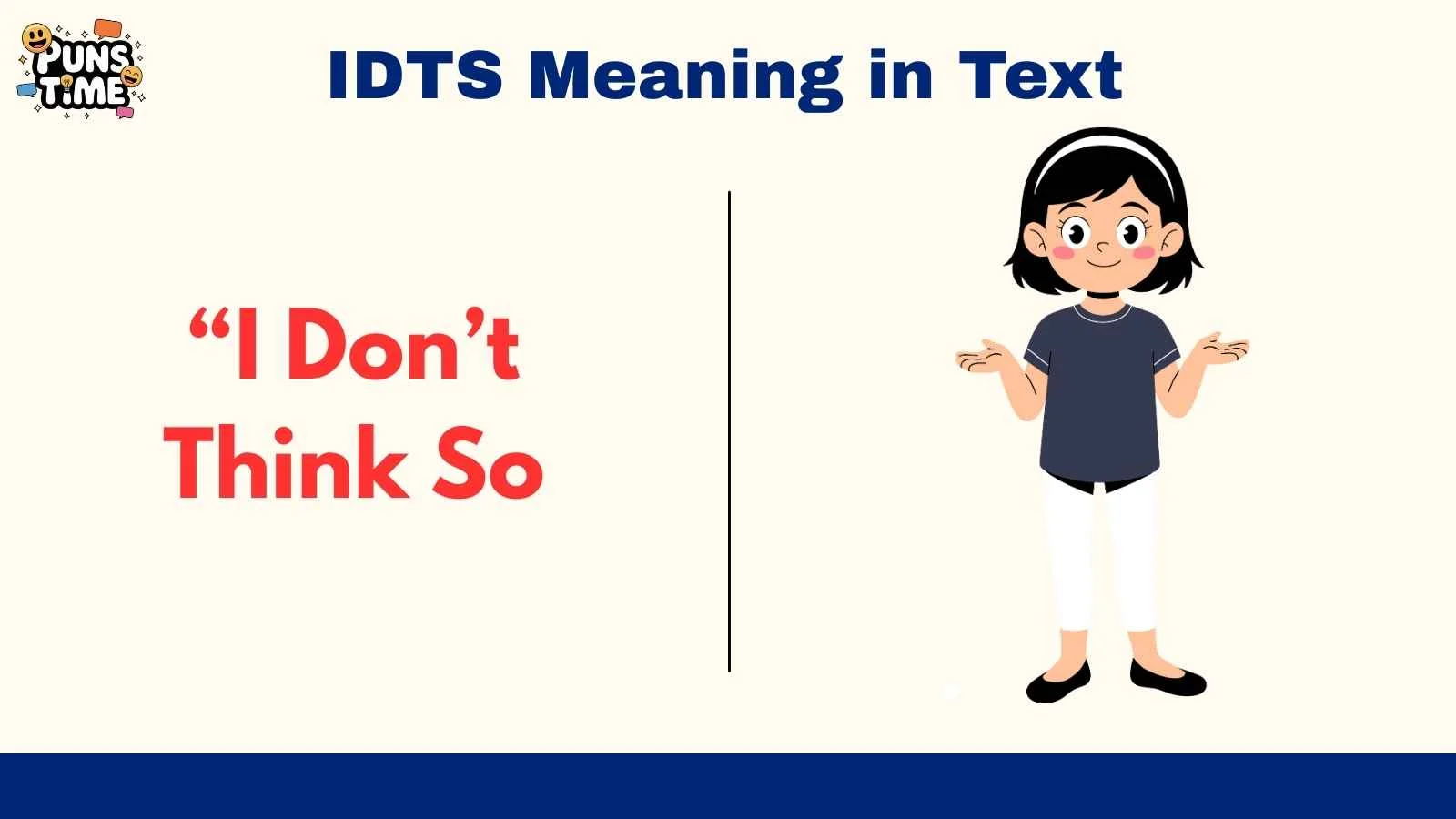
In text messages and online chats, IDTS usually means “I Don’t Think So.” It’s a casual, shortened way to express doubt, disagreement, or uncertainty without sounding too harsh.
Instead of typing a full sentence, people use IDTS to reply quickly, especially during fast conversations. It often carries a soft or neutral tone, depending on context. Sometimes it feels polite, and other times slightly dismissive — it all depends on how it’s used.
Basic meaning:
- IDTS = I Don’t Think So
People often use it when:
- They disagree gently
- They’re unsure about something
- They want to avoid a long explanation
Quick chat examples:
- “Are you coming tonight?”
→ IDTS, I’m super tired 😴 - “Is that rumor true?”
→ IDTS tbh
Unlike strong responses like “nope” or “definitely not,” IDTS sounds softer and more conversational. That’s why it’s popular in friendly chats, group messages, and social media replies.
Full Form, Stands For & Short Meaning of IDTS
The full form of IDTS is:
I Don’t Think So
Short meaning:
- Probably not
- I doubt it
- I’m not sure, but likely no
IDTS doesn’t always mean a firm “no.” Often, it suggests uncertainty rather than total rejection.
For example:
- “Will the class be canceled?”
→ IDTS (means: “I doubt it, but I’m not 100% sure”)
That flexibility is what makes IDTS useful. It allows people to respond without committing strongly either way.
Origin, History & First Known Use of IDTS
IDTS emerged naturally with early internet chat culture in the late 1990s and early 2000s. As SMS texting became common, users started shortening everyday phrases to save time and characters.
Before unlimited texting plans, abbreviations were essential. Phrases like:
- IDK (I don’t know)
- TBH (to be honest)
- IMO (in my opinion)
…appeared alongside IDTS.
While there’s no single recorded “first use,” IDTS gained popularity in:
- Online forums
- AOL and MSN chats
- Early mobile texting
Today, it continues to survive because it still sounds natural and useful — even in modern social apps.
How People Use IDTS in Daily Conversations
IDTS is mostly used in casual, informal communication. You’ll rarely see it in professional emails, but it’s everywhere in personal chats.
People use it to:
- Respond quickly
- Avoid confrontation
- Express mild disagreement
Common daily uses:
- Declining plans politely
- Questioning information
- Reacting to suggestions
Examples:
- IDTS that movie is good tbh 🎬
- IDTS I can finish it today
- IDTS he meant it seriously
Tone matters. Adding emojis or extra words often softens the message and prevents misunderstandings.
IDTS Meaning Across WhatsApp, Instagram, TikTok & Snapchat
Although the meaning stays the same, the tone can change slightly by platform.
Usually friendly and conversational.
- IDTS I’ll make it tonight 😅
Instagram DMs
Often casual or flirty.
- IDTS you’re ready for that challenge 😏
TikTok comments
More opinion-based.
- IDTS this trend will last long
Snapchat
Very short and informal.
- IDTS lol
Across platforms, IDTS almost always means “I don’t think so,” but context defines emotion.
Different Meanings of IDTS in Other Fields
Outside texting, IDTS can have technical meanings, though they’re rarely used in casual chat.
Possible alternatives include:
- Intrusion Detection and Tracking System (cybersecurity)
- Integrated Digital Training System (education or military)
However, if you see IDTS in a message or comment, 99% of the time it means “I don’t think so.”
Common Confusions, Mistakes & Wrong Interpretations
Many people misread IDTS as:
- “I don’t think seriously”
- “I doubt this strongly” (too harsh)
- A rude response
In reality, IDTS is usually neutral, not aggressive.
Mistakes to avoid:
- Assuming it means anger
- Taking it personally
- Using it in formal writing
Context and tone indicators (like emojis) matter a lot.
Similar Terms, Alternatives & Related Slang
Related abbreviations include:
- IDK – I don’t know
- IMO – In my opinion
- TBH – To be honest
- NGL – Not gonna lie
- IDC – I don’t care
Examples of IDTS in Real Chat Situations
Quick, realistic examples:
- IDTS that’s the right answer 🤔
- IDTS we should tell them yet
- IDTS lol, sounds risky 😬
- IDTS I’m ready for Monday 😭
These short replies feel natural and human — exactly why people keep using IDTS.
How to Reply When Someone Says IDTS
Your reply depends on intent.
They seem unsure:
- “Yeah, maybe you’re right.”
If they disagree:
- “Why not?”
- “What makes you think that?”
If it’s casual:
- “Fair enough 😄”
Don’t overthink it — IDTS usually invites conversation, not conflict.
Is IDTS Still Popular? Trends & Online Usage
Yes, IDTS is still widely used, though it’s not as trendy as newer slang. It remains popular because:
- It’s short
- Easy to understand
- Still sounds natural
While Gen Z uses newer expressions, IDTS continues to appear in everyday texting, comments, and replies — especially among millennials and mixed-age groups.
FAQs:
1. What does IDTS stand for in texting?
It stands for I Don’t Think So.
2. Is IDTS rude?
No, it’s usually polite or neutral.
3. Can IDTS mean no?
Yes, but it’s a soft or uncertain “no.”
4. Is IDTS used on Snapchat?
Yes, very commonly in short replies.
5. Should I use IDTS in professional messages?
No, it’s best for casual conversations only.
Conclusion:
The IDTS meaning in text is simple yet surprisingly flexible. It stands for “I don’t think so” and is widely used to express doubt, uncertainty, or gentle disagreement in online conversations.
From WhatsApp and Snapchat to Instagram and TikTok, IDTS fits naturally into everyday digital communication. Its popularity comes from sounding casual without being harsh making it perfect for friendly chats.
While it has other technical meanings in professional fields, in texting it almost always carries the same informal message. Understanding abbreviations like IDTS helps you communicate more clearly and confidently online, without second-guessing what someone really meant.