If you’ve ever received a message that simply says “HU?” you might have paused and wondered what it means. Short text slang like this is common in online chats, social media comments, and direct messages.
People search for “HU meaning in text” because they want quick clarity without feeling confused or awkward in a conversation.
In today’s fast digital world, short forms save time. Apps like WhatsApp, Instagram, TikTok, and Snapchat are full of quick abbreviations.
Some are obvious, while others can feel unclear. HU is one of those short forms that depends on context.
In this guide, you’ll learn what HU means in text, where it came from, how to use it, and how to reply when someone sends it to you.
What Does HU Mean in Text & Chat?
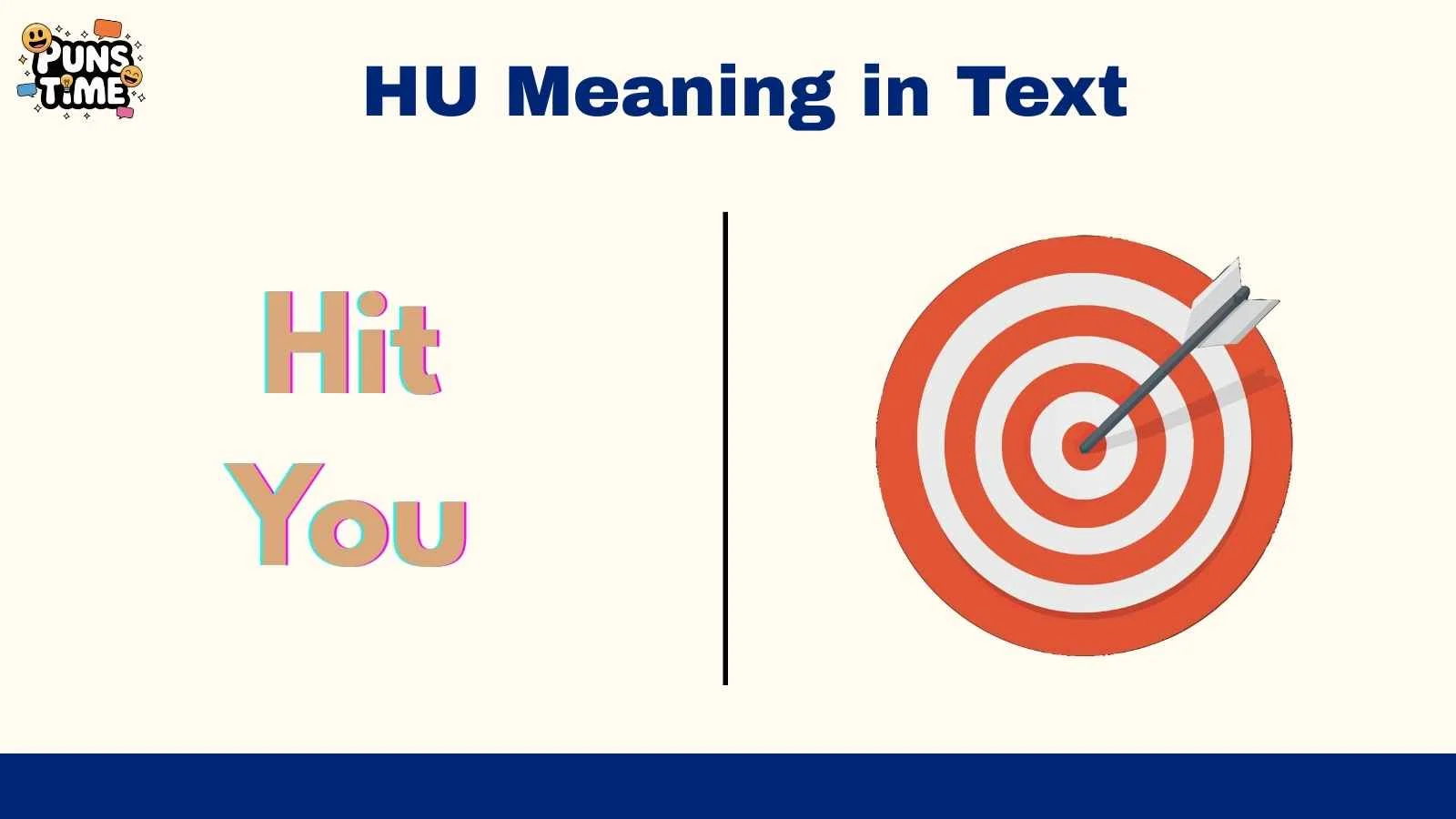
In text and chat, HU usually means “Hit You” or “Hook Up.” The meaning depends on the situation and tone of the conversation.
Most commonly, HU appears in casual messaging. For example:
- “I’ll HU later.”
- “Can I HU after work?”
- “He tried to HU with me.”
In the first two examples, HU means “hit you up”, which means to contact someone. In the third example, HU means “hook up.”
Because HU is short, people use it when typing fast. It saves time and feels informal. You’ll often see it between friends, classmates, or people chatting online.
It’s important to read the whole message. HU by itself may feel confusing, but in a sentence, the meaning becomes clear.
Quick meanings:
- HU = Hit You (contact you)
- HU = Hook Up (romantic or casual meeting)
Context is everything. Always look at the tone of the chat before assuming the meaning.
Full Form, Stands For & Short Meaning of HU
HU does not have one official “full form.” Instead, it is a shortened version of longer phrases.
Here are the most common full forms:
- HU = Hit You
- HU = Hook Up
Sometimes people also mean:
- HU = Hold Up (rare in text)
- HU = Heads Up (less common abbreviation)
However, the most popular meaning online is linked to “hit you up.”
Short meaning summary:
- “I’ll HU” = I’ll message or call you.
- “Let’s HU” = Let’s meet or connect.
- “He wants to HU” = He wants to hook up.
Unlike formal abbreviations, HU is slang. It is not used in professional emails or academic writing. You’ll mostly see it in casual texting.
If you’re learning online slang, you might also want to check related abbreviations like:
- HMU (Hit Me Up)
- WYD (What You Doing)
- BRB (Be Right Back)
(Internal linking suggestion: Link to your pages on “HMU Meaning in Text” and “WYD Meaning in Text.”)
Origin, History & First Known Use of HU
HU became popular with the rise of SMS texting in the early 2000s. At that time, people paid per text message. Shorter words saved money and space.
As smartphones grew, texting slang became even more common. Social media apps like Facebook Messenger and WhatsApp made quick typing the norm. HU likely evolved as a shortened form of “hit you” or “hook up.”
The phrase “hit you up” has been around for decades in spoken English. It means to contact someone later. When texting became popular, people shortened it to HMU (Hit Me Up). From there, HU became a faster, more casual option.
“Hook up” also became common slang in the 1990s and 2000s. It often referred to romantic or casual relationships. Online dating apps helped spread this usage.
HU is not formal English. It grew naturally from digital culture. Like many slang terms, it spread through young users first and then became more mainstream.
How People Use HU in Daily Conversations
People use HU in relaxed, friendly chats. It’s quick and easy. You won’t see it in business emails, but you’ll see it in DMs and texts.
Here are common ways people use HU:
- “I’ll HU after dinner.”
- “HU when you get home.”
- “She told me to HU tomorrow.”
- “Do you wanna HU later?”
In daily conversation, HU often replaces full sentences. Instead of writing, “I will contact you later,” someone simply types, “I’ll HU.”
It can also show interest:
- “He’s trying to HU 👀”
- “They HU last night.”
The tone can be friendly, flirty, or casual. That’s why context matters.
Tip: If you’re unsure what someone means, you can politely ask:
- “Do you mean hit me up?”
- “Wait, what do you mean by HU?”
Clear communication avoids awkward moments.
HU Meaning Across WhatsApp, Instagram, TikTok & Snapchat
The meaning of HU in text stays mostly the same across platforms, but tone changes slightly.
Usually means “hit you up.”
Example:
- “I’ll HU tomorrow 👍”
Can mean “hit you up” or “hook up.”
Example:
- “DM me, I’ll HU.”
- “They HU after the party.”
TikTok
Often used in comments about relationships.
Example:
- “Did they HU or not? 😅”
Snapchat
More casual and flirty.
Example:
- “You tryna HU? 👀”
On social media, slang spreads fast. Younger users use HU more often. On professional platforms like LinkedIn, you won’t see it.
Different Meanings of HU in Other Fields
Outside texting slang, HU can mean other things.
Examples:
- Howard University (HU)
- Hearing Unit (medical term)
- Hounsfield Unit (CT scan measurement)
- Hungary (country code HU)
In science, HU (Hounsfield Unit) measures density in medical scans. In education, HU may refer to Howard University.
This is why context is key. In a medical report, HU does not mean “hook up.”
Always check the topic before assuming the slang meaning.
Common Confusions, Mistakes & Wrong Interpretations
Many people confuse HU with similar abbreviations.
Common mistakes:
- Thinking HU always means “hook up.”
- Mixing HU with HMU.
- Assuming it’s rude or negative.
Remember:
- HMU = Hit Me Up (you contact me)
- HU = Hit You (I contact you)
Some people may misread HU as “huh?” That can cause confusion.
If the message feels unclear, ask for clarification instead of guessing.
Similar Terms, Alternatives & Related Slang
Here are similar slang terms:
- HMU – Hit Me Up
- WYD – What You Doing
- TTYL – Talk To You Later
- BRB – Be Right Back
- IDC – I Don’t Care
You can use full phrases instead of HU:
- “I’ll message you.”
- “Let’s meet.”
- “Call me later.”
(Internal linking suggestion: Add links to pages about “HMU Meaning,” “TTYL Meaning,” and “IDC Meaning.”)
Using full words is always safer in formal chats.
Examples of HU in Real Chat Situations
Here are realistic examples:
- “I’m busy now. I’ll HU tonight 😊”
- “Did you HU with him?”
- “HU when you’re free.”
- “We should HU this weekend!”
- “He said he’d HU but never did 😅”
Quick bullet recap:
- Friendly: “I’ll HU later.”
- Flirty: “You wanna HU? 😉”
- Casual: “HU tomorrow.”
Tone and emojis help show meaning.
How to Reply When Someone Says HU
Your reply depends on context.
It means “hit you up”:
- “Okay, talk later!”
- “Sure, I’ll wait.”
- “Sounds good 👍”
If it means “hook up”:
- “What do you mean?”
- “Maybe, let’s see.”
- “No thanks.”
If you’re confused:
- “Do you mean message me?”
- “Can you explain?”
Clear replies avoid misunderstanding.
Is HU Still Popular? Trends & Online Usage
HU is still used, but it’s less common than HMU. Many people prefer typing full phrases now because smartphones have auto-correct and voice typing.
However, younger users and fast texters still use HU in casual chats. It appears more in private messages than in public posts.
Slang trends change quickly. Some abbreviations fade, while others stay popular. HU remains part of online slang but is not as dominant as before.
FAQs:
1. What does HU stand for in texting?
It usually stands for “Hit You” or “Hook Up.”
2. Is HU the same as HMU?
No. HMU means “Hit Me Up.” HU means “Hit You.”
3. Is HU rude?
No, it’s casual slang. It depends on tone and context.
4. Does HU always mean hook up?
No. It often means “contact you.”
5. Is HU used professionally?
No, it’s informal and used in casual chats.
Conclusion:
Now you know the full answer to “HU meaning in text.” HU usually stands for “Hit You” or “Hook Up,” depending on the situation.
It’s short, casual, and common in texting and social media conversations. Like many slang terms, its meaning depends on context, tone, and the relationship between people chatting.
If you’re ever unsure, don’t guess. Ask politely for clarification. Digital communication moves fast, but clear understanding matters more than speed.
Slang like HU helps keep conversations quick and fun, but knowing its meaning helps you reply with confidence